

Beginner’s Guide to Investing: From Zero to Stock Market Hero
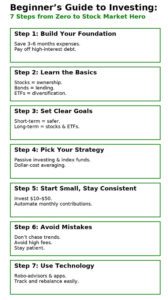
Investing may seem intimidating, but the truth is this: you don’t need to be a Wall Street expert to build wealth. Whether you’re starting with $50 or $5,000, smart investing can help you grow your money, beat inflation, and achieve financial freedom.
This beginner’s guide will take you from zero knowledge to stock market hero—covering the essentials of investing in a way that’s clear, practical, and actionable.
1. Why Invest in the First Place?
Saving money is important, but savings accounts typically don’t keep up with inflation. Over time, your money loses purchasing power.
👉 Investing allows your money to work for you by generating returns through stocks, bonds, mutual funds, or real estate.
- $1,000 left in a savings account might barely grow in 10 years.
- $1,000 invested in the stock market could potentially double or triple in the same timeframe.
The earlier you start, the more you benefit from the magic of compound interest—earning returns on both your original money and the growth it generates.
2. Understand the Basics of Investing
Here are some key terms every beginner should know:
- Stocks: Shares of ownership in a company. If the company grows, your investment grows.
- Bonds: Loans you give to companies or governments. They pay you back with interest.
- Mutual Funds & ETFs: Bundles of stocks or bonds managed for you, offering instant diversification.
- Portfolio: The collection of all your investments.
- Risk Tolerance: How much financial risk you’re comfortable with—crucial for choosing investments.
👉 Knowledge is your best defence against fear and poor decisions.
3. Set Clear Financial Goals
Before investing, ask yourself:
- Am I saving for retirement?
- Do I want to buy a home?
- Am I building wealth for my children’s future?
Having specific goals determines your investment strategy. For example:
- Short-term goals (1–3 years): Safer investments like bonds or high-yield savings.
- Long-term goals (10+ years): Stocks and ETFs for higher growth potential.
4. Choose Your Investment Strategy
a) Active vs. Passive Investing
- Active investing means picking stocks and timing the market (hard for beginners).
- Passive investing means buying diversified funds and holding them long-term.
👉 Most beginners succeed with a passive, long-term approach using index funds or ETFs.
b) Dollar-Cost Averaging
Instead of waiting for the “perfect” time to invest, commit to investing a fixed amount regularly (e.g., $200 monthly). This strategy smooths out market ups and downs.
5. Start Small but Stay Consistent
You don’t need thousands of dollars to begin. Many platforms let you start with as little as $10 or $50.
What matters most is consistency. Small, regular contributions compound into significant wealth over time.
💡 Example: Investing $200/month at 8% annual returns grows to nearly $300,000 in 30 years.
6. Avoid These Beginner Mistakes
- Chasing hot stocks you see trending on social media.
- Timing the market—even pros can’t predict highs and lows.
- Investing without an emergency fund. Always save 3–6 months of expenses first.
- Ignoring fees. High fees eat into long-term returns.
👉 The smartest investors are disciplined, patient, and focused on the long term.
7. Use Technology to Your Advantage
Today’s investing apps and robo-advisors make it simple for beginners. They can help you:
- Open an investment account in minutes.
- Automatically invest each month.
- Build a diversified portfolio without deep expertise.
Becoming a stock market hero doesn’t mean taking big risks or predicting the next big company. It means starting early, staying consistent, and letting time and compounding do the heavy lifting.
The key is not perfection—it’s persistence. Every dollar invested today is a step closer to financial freedom tomorrow.
💡 Don’t wait for the “perfect moment” to start. The best time to invest was yesterday. The second-best time is right now.
✅ If you found this guide helpful, share it with friends who are ready to start their investing journey.


0 Comments